
EVERY DAY WITHMY GOUTIS A DAY WITHOUTOUR WALK

Gout is a common, painful form of arthritis caused by uric acid building up in the blood. It can be a lifelong disease that may get worse over time, potentially affecting not just your joints, but your entire body.
Actor portrayal

What Is Uric Acid?
Uric acid is a waste product that typically dissolves in your blood and exits the body through your urine. Uric acid is produced when your body breaks down purines, which are natural substances found in the body as well as in some foods that you may be eating. Because of this, purine-rich foods can increase the production of uric acid and therefore increase the risk of gout. Some foods that are high in purines include:

Meats and meat sauces
- Game meats (like turkey, venison, etc)
- Organ meats
- Red meats
- Gravies

Certain seafood
- Shellfish (mussels, shrimp, etc)
- Sardines and anchovies
- Herring, haddock, trout, codfish

Foods and drinks high in sugar
- Alcohol
- Drinks made with high fructose corn syrup
- Sweets

While cutting these foods out of your diet helps, it may not be enough to reach your target uric acid levels. Before you take any steps to help manage your gout, remember to consult with your doctor first.

Uric Acid and Gout
Gout happens when uric acid is produced faster than your body can get rid of it. It builds up in your blood stream and can cause uric acid crystals, also known as gout crystals, to form and deposit in your joints and soft tissues, leading to what is known as a gout flare. Some symptoms of a gout flare include:

Unpredictable pain

Swelling

Inflammation

When gout gets to a more advanced stage, uric acid levels may remain high despite lifestyle and diet changes along with taking prescription gout medication. High uric acid levels that stay high are not always within your control, which is why this type of gout may sometimes be known as uncontrolled gout. Uncontrolled gout may also be referred to as advanced gout, chronic gout, tophaceous gout, progressive gout, or severe gout.
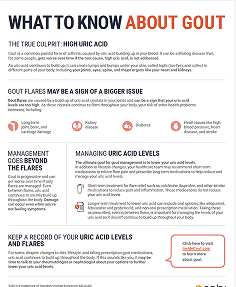
Download the “What to Know About Gout” Flashcard
Get more information on uric acid, gout symptoms, and gout treatments.

What Levels of Uric Acid Are Considered High?
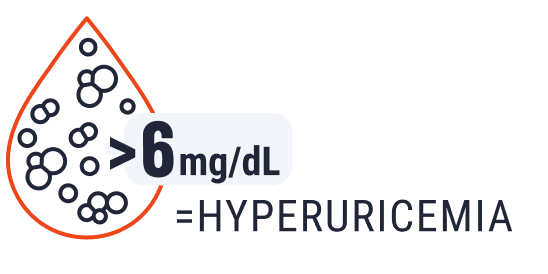
When your uric acid levels stay above 6 milligrams per deciliter (mg/dL), you’re considered to have hyperuricemia (hahy-per-yoor-uh-see-mee-uh), which is the biggest risk factor for developing gout and for gout getting worse. Your gout specialist, like a rheumatologist or nephrologist, can check your uric acid levels with a blood test.
What is a normal uric acid level?
Uric acid levels can vary and may be different for women and men. For women, a normal range is 2.6 mg/dL–6.0 mg/dL and for men, a normal range is 3.5 mg/dL–7.2 mg/dL.
How are uric acid levels tested?
The primary test for uric acid levels is a blood test, through which the amount of uric acid in your blood is measured. You can ask your doctor to include this test to help understand your uric acid level.
Can I develop or have gout if my uric acid level was in a normal range at a recent blood test?
Yes. Gout can develop, or you might already have gout, even if your uric acid level was measured within the normal range. Uric acid levels can fluctuate and may be in the normal range during a blood test, but high at other times, causing uric acid buildup. This is why it’s important to regularly monitor your uric acid levels over time.